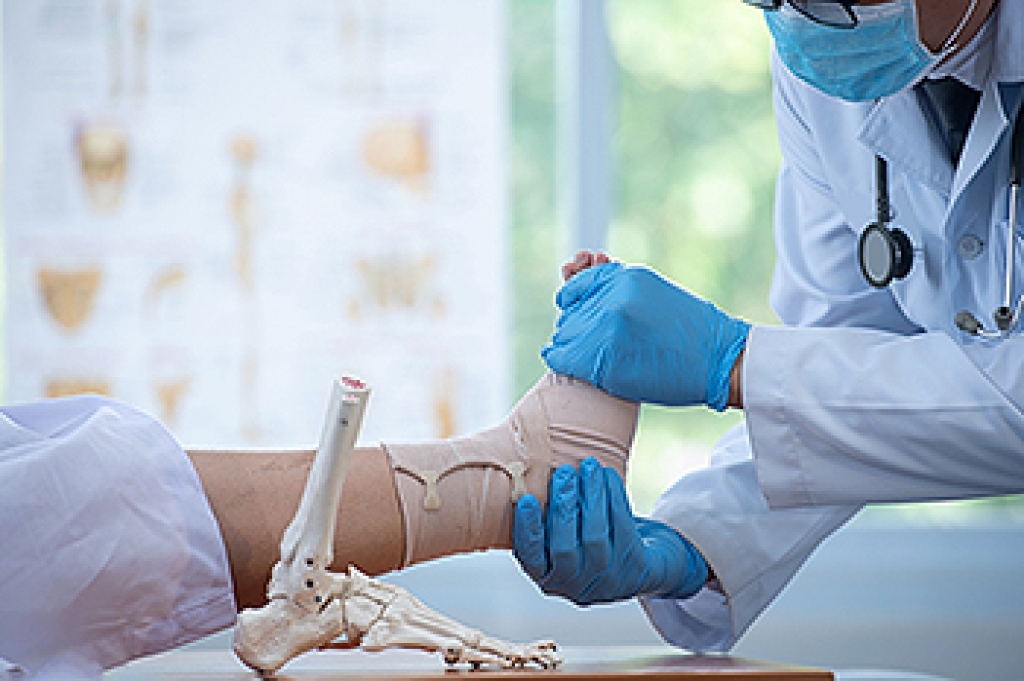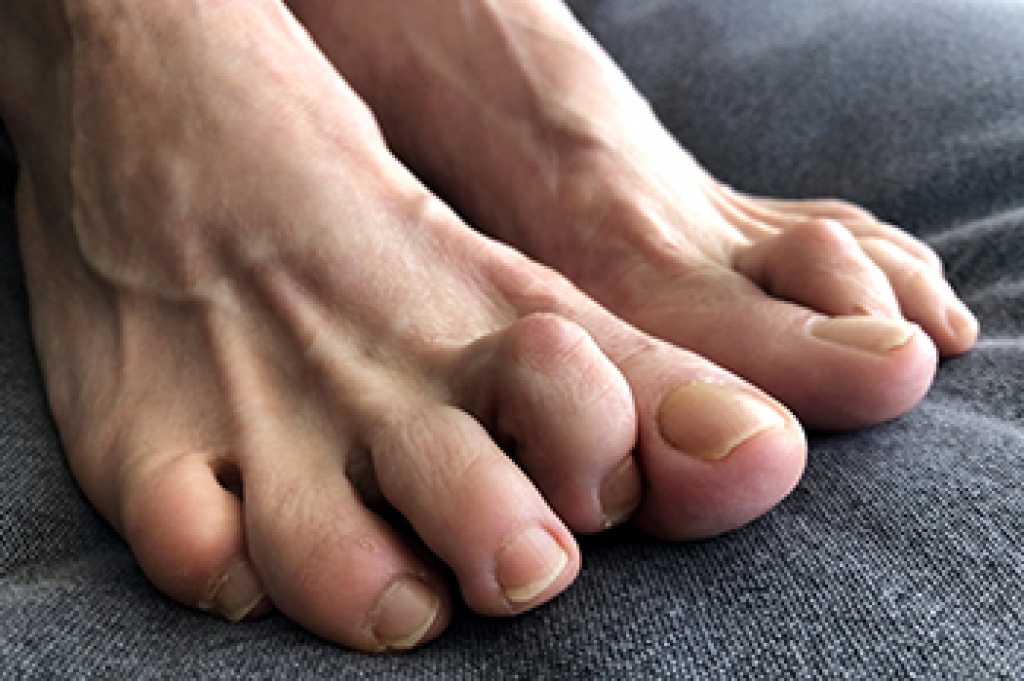
A hammertoe occurs when one of the three middle toes bends upward at the middle joint. Corns and calluses that can develop on the hammertoe can make wearing shoes and walking uncomfortable. If lifestyle changes, such as wearing wider shoes, using shoe inserts, or doing stretching and strengthening toe exercises do not help, surgery can be considered to correct a hammertoe. Hammertoe surgery is not a good option for those who have poor circulation in their feet, have a foot infection, or have other health problems making surgery a risk. If considered a good candidate for this surgery, it is typically a procedure that can be done as an outpatient under general anesthesia or using numbing medications. If the hammertoe is still somewhat flexible, a tendon transfer involving redirecting tendons from the bottom of the toe to the top where it is bent can be done to straighten the toe. If the hammertoe is fixed or rigid, a joint resection or fusion can be done. Joint resection is when tendons and ligaments are cut to help straighten the toe and the end of the bone is cut off so the toe can be fully extended. In fusion surgery, the ligaments and tendons are also cut but the two bones forming the affected joint are also cut for straightening the toe. If you have a painful hammertoe, it is suggested that you make an appointment with a podiatrist to see if more conservative treatment is possible or whether surgery is an option for you.
Foot surgery is sometimes necessary to treat a foot ailment. To learn more, contact Pasquale Cancelliere, DPM of Candria Foot and Ankle Specialists. Our doctor will assist you with all of your foot and ankle needs.
When Is Surgery Necessary?
Foot and ankle surgery is generally reserved for cases in which less invasive, conservative procedures have failed to alleviate the problem. Some of the cases in which surgery may be necessary include:
- Removing foot deformities like bunions and bone spurs
- Severe arthritis that has caused bone issues
- Cosmetic reconstruction
What Types of Surgery Are There?
The type of surgery you receive will depend on the nature of the problem you have. Some of the possible surgeries include:
- Bunionectomy for painful bunions
- Surgical fusion for realignment of bones
- Neuropathy decompression surgery to treat nerve damage
Benefits of Surgery
Although surgery is usually a last resort, it can provide more complete pain relief compared to non-surgical methods and may allow you to finally resume full activity.
Surgical techniques have also become increasingly sophisticated. Techniques like endoscopic surgery allow for smaller incisions and faster recovery times.
If you have any questions, please feel free to contact our offices located in Londonderry, NH and Salem, NH . We offer the newest diagnostic and treatment technologies for all your foot care needs.