
Like us on facebook
Follow us on twitter
review us on google

Foot Problems Mistaken for Bunions

The assumption that any discomfort in the big toe signifies a bunion can lead to unnecessary surgeries. Beyond bunions, several foot conditions can mimic their symptoms. Big toe joint arthritis, characterized by bone spurs due to cartilage degeneration, is one example. While this ailment often causes pain and inflammation in the big toe, it typically affects the top of the joint. A ganglion cyst is a fluid-filled sac that can attach to the big toe joint, posing a diagnostic challenge. Gout, marked by intense pain and swelling from uric acid crystal deposits, can masquerade as a bunion due to similar symptoms. Bursitis, a painful inflammation of the bursa between the skin and bone, may also be mistaken as a bunion. For an accurate diagnosis of your big toe pain, it is suggested that you schedule an appointment with a podiatrist. Depending on the outcome of an exam, pain management or other medical interventions may be suggested. 

Toe pain can disrupt your daily activities. If you have any concerns, contact Pasquale Cancelliere, DPM of Candria Foot and Ankle Specialists. Our doctor can provide the care you need to keep you pain-free and on your feet.

What Causes Toe Pain?

Most severe toe pain is caused due to a sports injury, trauma from dropping something heavy on the toe, or bumping into something rigid. Other problems can develop over time for various reasons.

Toe pain can be caused by one or more ailments. The most common include:

  • Trauma
  • Sports injury
  • Wearing shoes that are too tight
  • Arthritis
  • Gout
  • Corns and calluses
  • Hammertoe
  • Bunions
  • Blisters
  • Ingrown toenails
  • Sprains
  • Fractures (broken bones)
  • Dislocations

When to See a Podiatrist

  • Severe pain
  • Persistent pain that lasts more than a week
  • Signs of infection
  • Continued swelling
  • Pain that prevents walking

Diagnosis

In many cases the cause of toe pain is obvious, but in others, a podiatrist may want to use more advanced methods to determine the problem. These can range from simple visual inspections and sensation tests to X-rays and MRI scans. Prior medical history, family medical history, and any recent physical traumatic events will all be taken into consideration for a proper diagnosis.

Treatment

Treatments for toe pain and injuries vary and may include shoe inserts, padding, taping, medicines, injections, and in some cases, surgery. If you believe that you have broken a toe, please see a podiatrist as soon as possible.

If you have any questions please contact our offices located in Londonderry, NH and Salem, NH . We offer the newest diagnostic and treatment technologies for all your foot and ankle needs.
Read more about Toe Pain

Battling Swollen Feet During Pregnancy

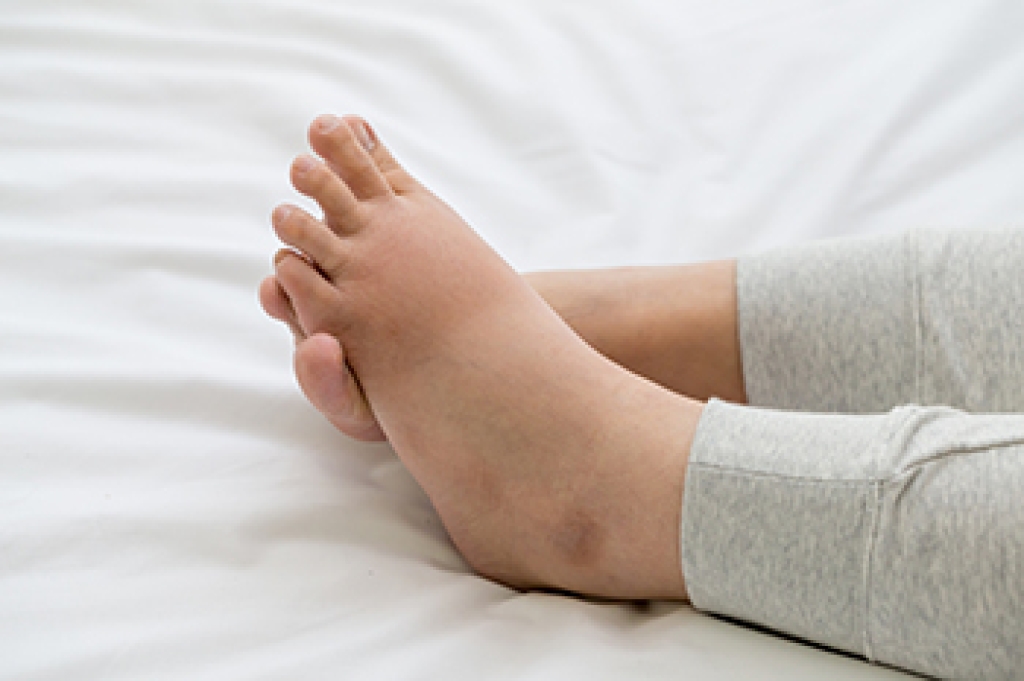
During pregnancy, the extra fluid in the body and the pressure from the growing uterus can cause swelling, or edema, in the ankles and feet. However, there are several strategies to help reduce swelling in the feet. First and foremost, ensure you stay well-hydrated by drinking plenty of water throughout the day to help flush out excess fluids. Elevating your feet whenever possible, especially while resting or sleeping, can aid in reducing swelling by allowing gravity to assist in fluid drainage. Consider wearing compression stockings, which provide gentle pressure to improve circulation and reduce swelling. Engaging in low-impact exercises, such as walking or swimming, can also help improve circulation and alleviate swelling. Avoiding prolonged periods of sitting or standing is important, as it can contribute to fluid retention in the lower extremities. Invest in comfortable, supportive shoes with adequate arch support to further alleviate discomfort. While having swollen feet during pregnancy is common, if problems arise, it is suggested that you make an appointment with a podiatrist for an evaluation and additional treatment options.

Pregnant women with swollen feet can be treated with a variety of different methods that are readily available. For more information about other cures for swollen feet during pregnancy, consult with Pasquale Cancelliere, DPM from Candria Foot and Ankle Specialists. Our doctor will attend to all of your foot and ankle needs.

What Foot Problems Can Arise During Pregnancy?

One problem that can occur is overpronation, which occurs when the arch of the foot flattens and tends to roll inward.  This can cause pain and discomfort in your heels while you’re walking or even just standing up, trying to support your baby.  

Another problem is edema, or swelling in the extremities. This often affects the feet during pregnancy but tends to occur in the later stages. 

How Can I Keep My Feet Healthy During Pregnancy?

  • Wearing orthotics can provide extra support for the feet and help distribute weight evenly
  • Minimize the amount of time spent walking barefoot
  • Wear shoes with good arch support
  • Wear shoes that allow for good circulation to the feet
  • Elevate feet if you experience swelling
  • Massage your feet
  • Get regular, light exercise, such as walking, to promote blood circulation to the feet

If you have any questions, please feel free to contact our offices located in Londonderry, NH and Salem, NH . We offer the newest diagnostic and treatment technologies for all your foot care needs.

Read more about Pregnancy and Foot Health

Staying Abreast of Diabetic Foot Ulcer Treatments

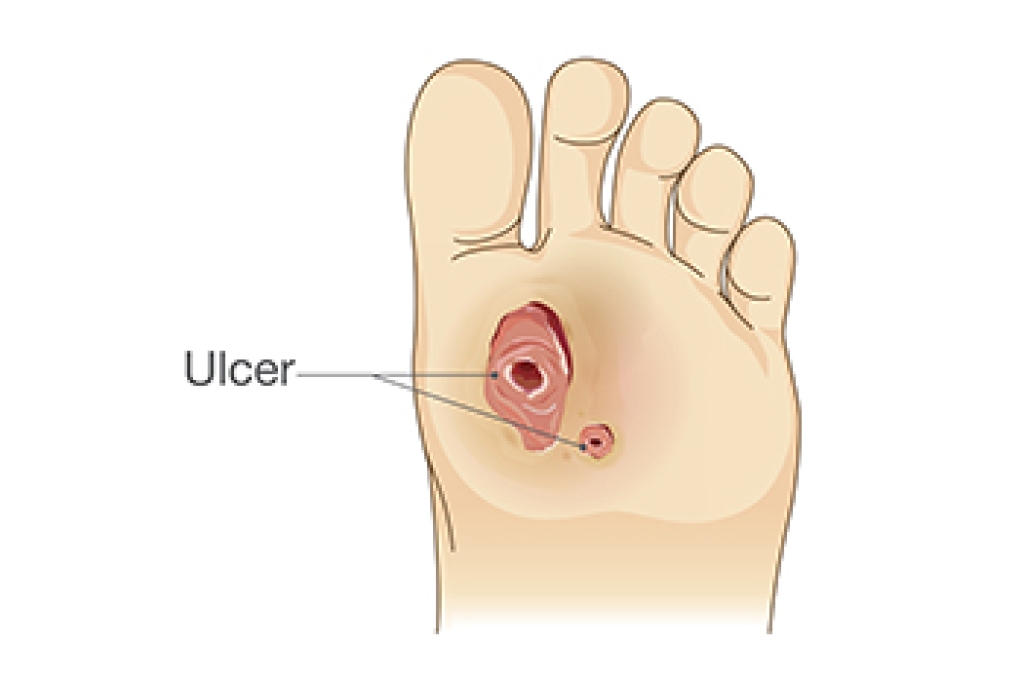
Staying informed about diabetic foot ulcer treatments is necessary for effective patient care. Common interventions include surgical debridement to remove necrotic tissue, antibiotic therapy to combat infection, and vascular assessment to optimize blood flow. Offloading pressure from affected areas is essential for healing. In severe cases, amputation may be necessary to prevent further complications. Additionally, various therapies exist for non-healing wounds, such as advanced dressing. Podiatrists play a vital role in diabetic foot ulcer management, possessing specialized education and skills in this field. By staying abreast of evolving treatments and leveraging multidisciplinary approaches, they can enhance outcomes and improve the quality of life for individuals with diabetic foot ulcers. If you suffer from diabetic foot ulcers, it is strongly suggested that you make routine appointments with a podiatrist for the best care possible.

Wound care is an important part in dealing with diabetes. If you have diabetes and a foot wound or would like more information about wound care for diabetics, consult with Pasquale Cancelliere, DPM from Candria Foot and Ankle Specialists. Our doctor will assess your condition and provide you with quality foot and ankle treatment.

What Is Wound Care?

Wound care is the practice of taking proper care of a wound. This can range from the smallest to the largest of wounds. While everyone can benefit from proper wound care, it is much more important for diabetics. Diabetics often suffer from poor blood circulation which causes wounds to heal much slower than they would in a non-diabetic. 

What Is the Importance of Wound Care?

While it may not seem apparent with small ulcers on the foot, for diabetics, any size ulcer can become infected. Diabetics often also suffer from neuropathy, or nerve loss. This means they might not even feel when they have an ulcer on their foot. If the wound becomes severely infected, amputation may be necessary. Therefore, it is of the upmost importance to properly care for any and all foot wounds.

How to Care for Wounds

The best way to care for foot wounds is to prevent them. For diabetics, this means daily inspections of the feet for any signs of abnormalities or ulcers. It is also recommended to see a podiatrist several times a year for a foot inspection. If you do have an ulcer, run the wound under water to clear dirt from the wound; then apply antibiotic ointment to the wound and cover with a bandage. Bandages should be changed daily and keeping pressure off the wound is smart. It is advised to see a podiatrist, who can keep an eye on it.

If you have any questions please contact our offices located in Londonderry, NH and Salem, NH . We offer the newest diagnostic and treatment technologies for all your foot and ankle needs.

Read more about Wound Care

Types and Causes of Toe Arthritis

Toe arthritis comes in various forms, each with its triggers and symptoms. Osteoarthritis, which is often spurred by wear and tear or injury, gradually erodes the cartilage between toe bones. Rheumatoid arthritis unleashes inflammation throughout the body, causing redness, warmth, and swelling in the toes, along with systemic symptoms like fatigue. Gout, driven by uric acid crystal formation, particularly targets the big toe and can be influenced by genetics, diet, alcohol intake, and obesity. Psoriatic arthritis, an autoimmune condition, often causes skin lesions that precede joint symptoms. For suspected toe arthritis, a podiatrist can offer a comprehensive assessment, including medical history, physical examination, X-rays, and possibly joint fluid analysis, to pinpoint the type and extent of the condition. For help with your toe pain, it is suggested that you make an appointment with a podiatrist. 

Arthritis can be a difficult condition to live with. If you are seeking treatment, contact Pasquale Cancelliere, DPM from Candria Foot and Ankle Specialists. Our doctor can provide the care you need to keep you pain-free and on your feet.

Arthritic Foot Care  

Arthritis is a joint disorder that involves the inflammation of different joints in your body, such as those in your feet. Arthritis is often caused by a degenerative joint disease and causes mild to severe pain in all affected areas. In addition to this, swelling and stiffness in the affected joints can also be a common symptom of arthritis.

In many cases, wearing ill-fitting shoes can worsen the effects and pain of arthritis. Wearing shoes that have a lower heel and extra room can help your feet feel more comfortable. In cases of rheumatoid arthritis, the arch in your foot may become problematic. Buying shoes with proper arch support that contour to your feet can help immensely.

Alleviating Arthritic Pain

  • Exercises that stretch the foot can prevent further pain and injury and increase mobility
  • Most of the pain can be alleviated with anti-inflammatory drugs, heat, and topical medications
  • Massages can help temporarily alleviate pain.

It is best to see your doctor for the treatment that is right for your needs and symptoms. Conditions vary, and a podiatrist can help you determine the right method of care for your feet.

If you have any questions please feel free to contact our offices located in Londonderry, NH and Salem, NH . We offer the newest diagnostic tools and technology to treat your foot and ankle needs.

Read more about Arthritic Foot Care

Get Proper Treatment for Ankle Injuries

If you're experiencing ankle pain, you may be suffering from an ankle injury. Sprains, fractures, Achilles tendonitis, and Achilles tendon ruptures are just some examples of potential ankle injuries. Don't wait for care for an ankle injury, as it may worsen over time. We can help!

scroll to top